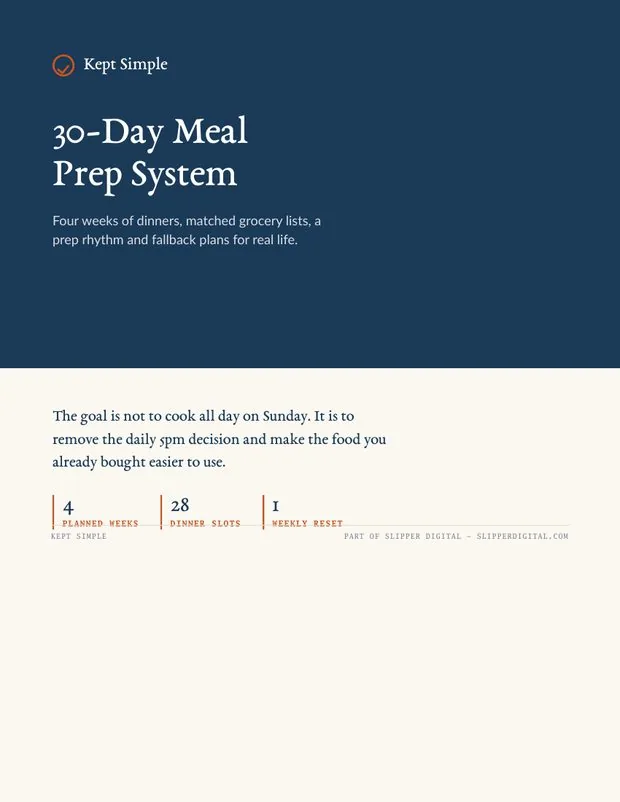
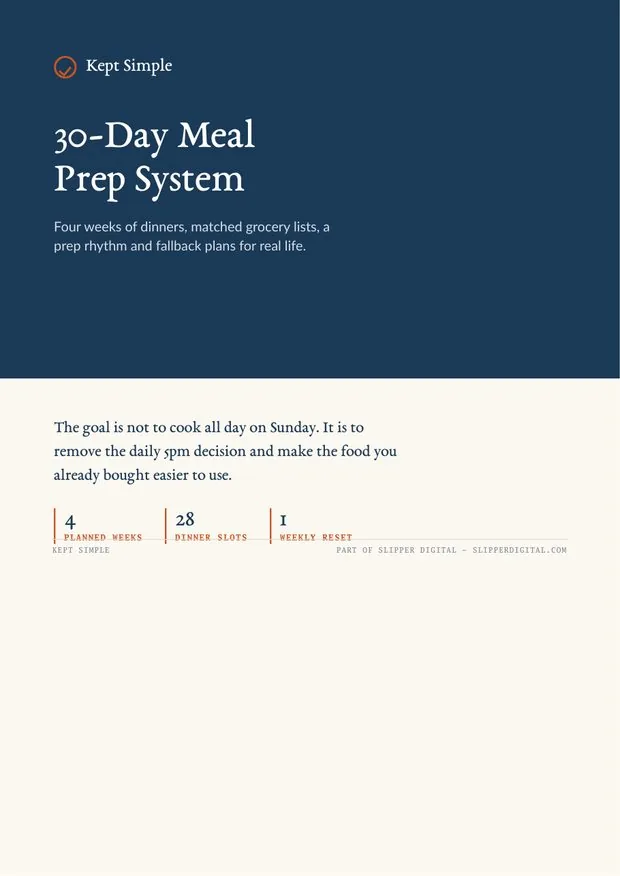
Four planned weeks, matched grocery lists, a Sunday prep rhythm and fallback plans for real life - so the food you already bought actually gets used.


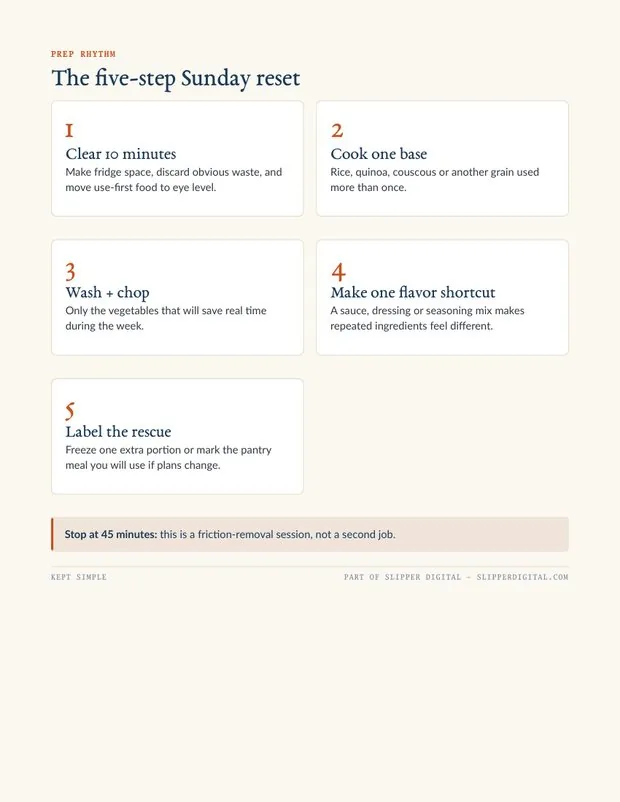
Four small moves at the start of the week - not four hours in the kitchen.
Put the fastest meals there first.
Check the cupboard and freezer before you add anything.
Wash, chop, cook a grain, or make one sauce. Stop when the week gets easier.
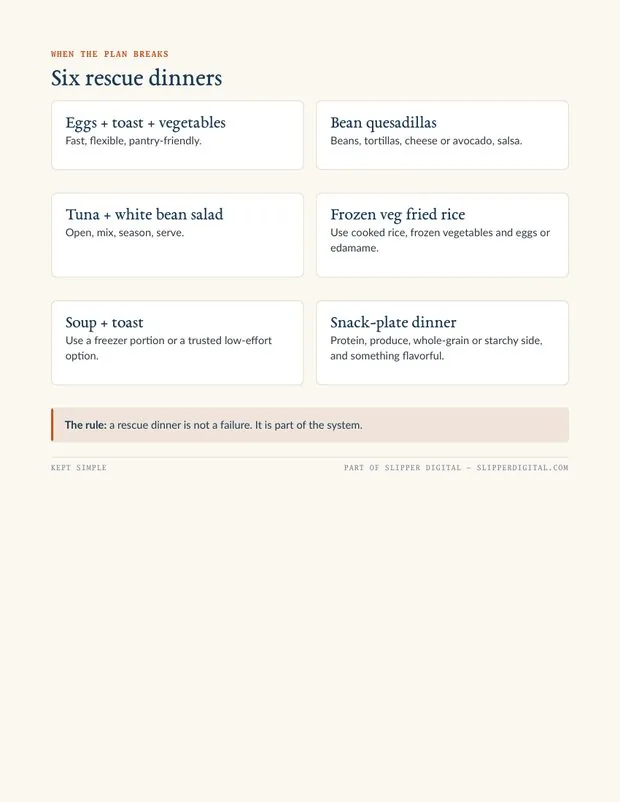
Use a freezer, pantry or no-cook option when the plan breaks.
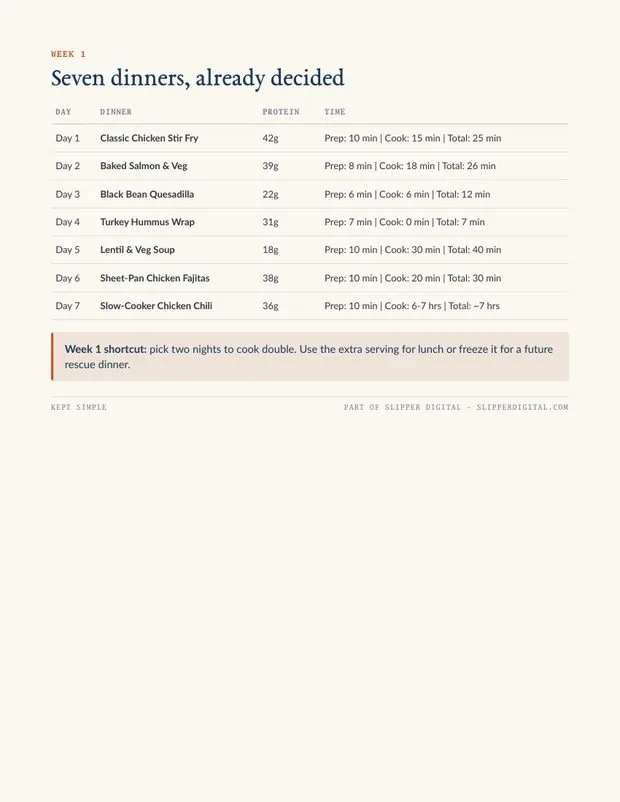
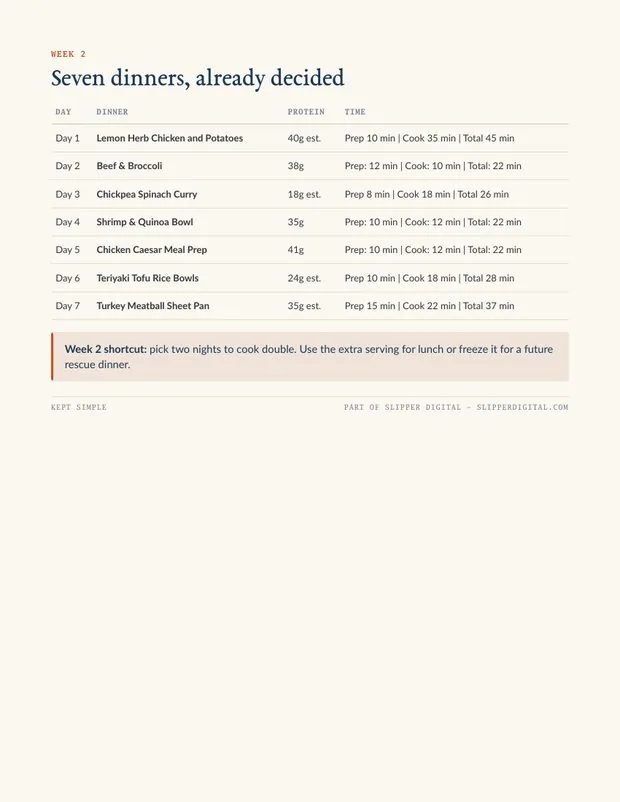
Each week is a seven-day table: the dinner, its protein estimate, and prep, cook and total time - so you can see the whole week before you commit to it.


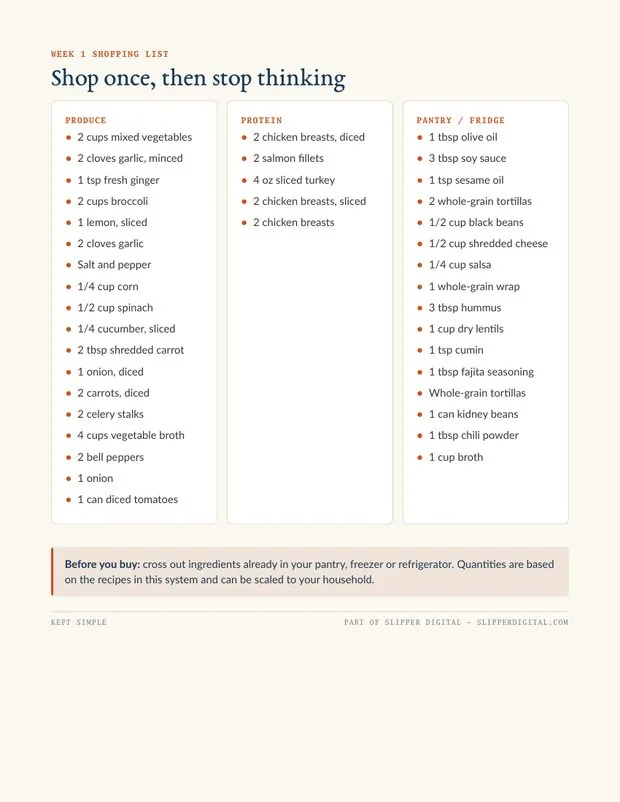
Each week's list is split into produce, protein, and pantry/fridge, built directly from that week's seven dinners - so you shop once and stop thinking about it.

Five steps, once a week: clear space, cook one base, wash and chop only what saves real time, make one flavor shortcut, and label a rescue portion. Then stop.

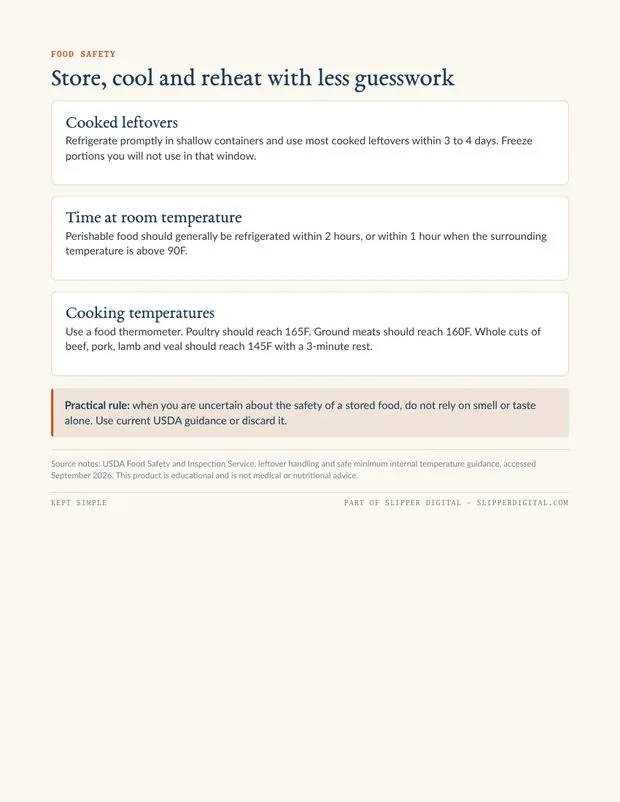
Straightforward guidance on refrigerating leftovers, how long food can sit out safely, and minimum safe cooking temperatures - sourced from USDA guidance, not guesswork.
Educational content, not medical or nutritional advice.

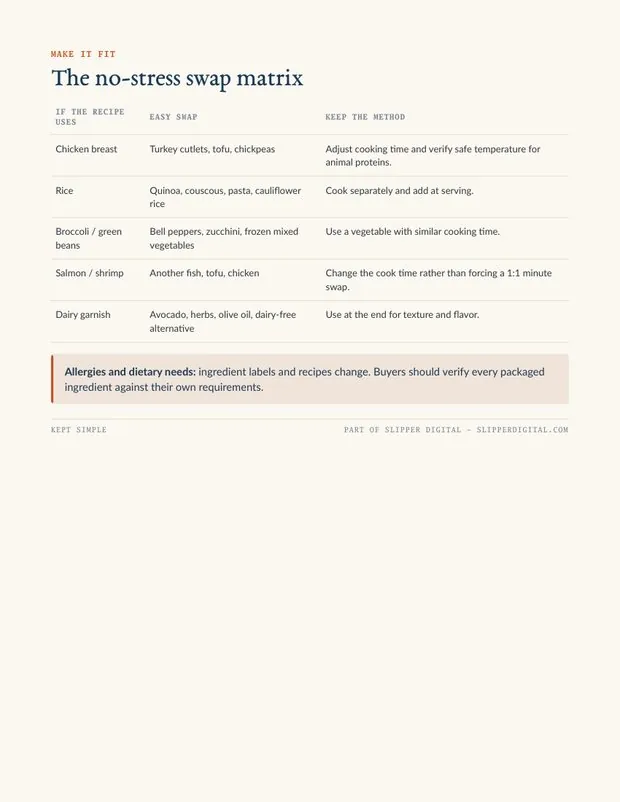
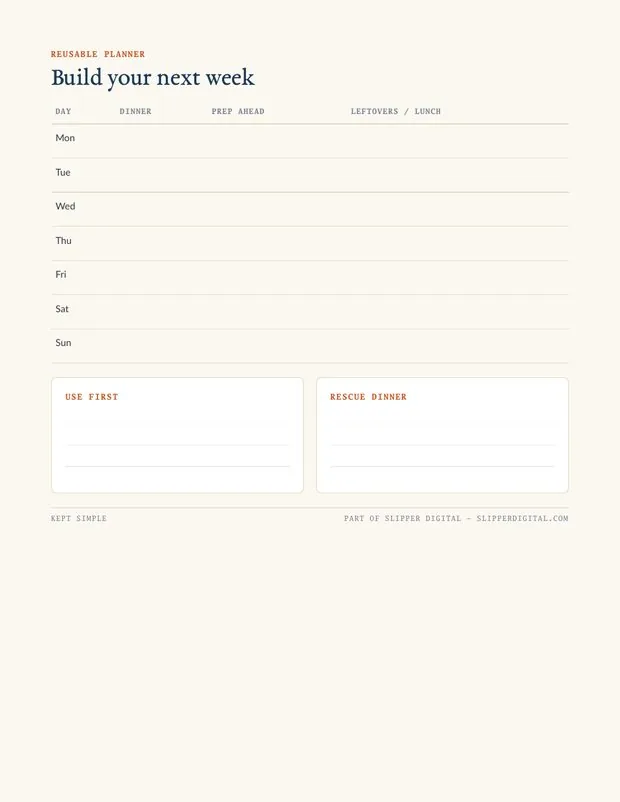
The plan is a starting point, not a contract. Swap an ingredient without losing the method, fall back on a rescue dinner without it feeling like a failure, or copy the reusable page for any week that doesn't match the schedule.


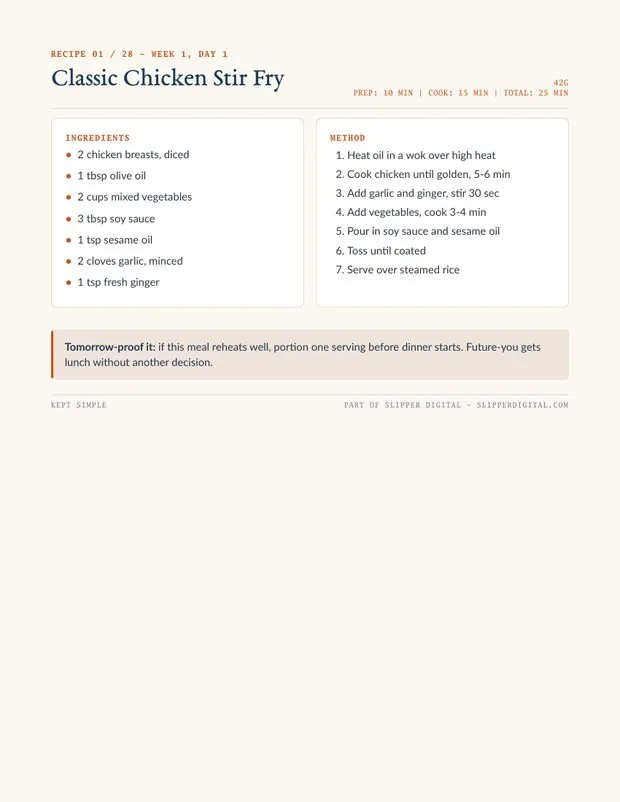
Every scheduled dinner gets its own card - ingredients, method and timing, plus a note for portioning tomorrow's lunch before tonight's dishes are even done.

The full system comes in both US Letter and A4, laid out cleanly for each, so it prints properly wherever you are.


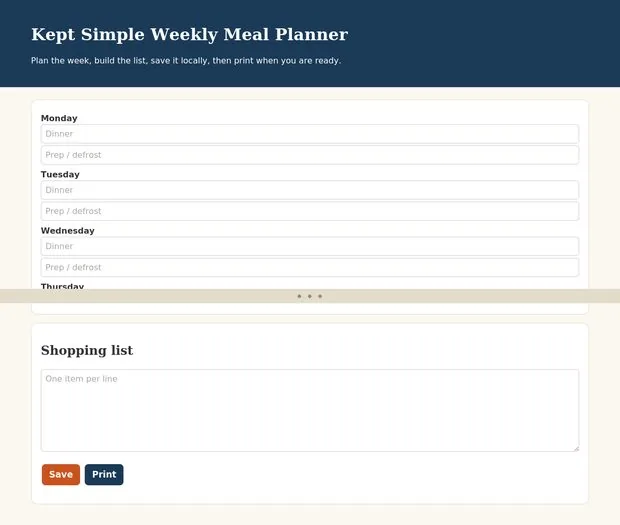
Plan the week you actually have instead of the one on the schedule: type in dinners and prep notes, build a shopping list, then save it locally or print it. Nothing you type leaves your own device.

"A rescue dinner is not a failure. It is part of the system."The Kept Simple rescue-dinner rule
No. Each week stands on its own - the seven-day table and its matching grocery list work in any order, or on repeat, for as long as you want to reuse them.
Use the swap matrix to change the protein, grain or vegetable without losing the cooking method, or drop in one of the six rescue dinners instead. Nothing about the system depends on any single recipe working out.
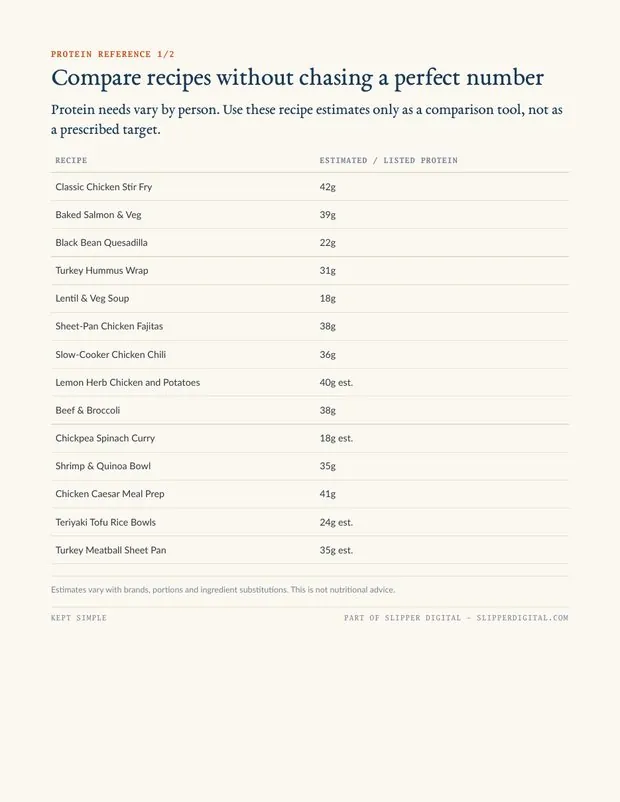
No. Recipes marked "est." are estimates meant for comparing meals against each other, not a nutrition label, and the reference pages say so directly. Protein needs also vary by person.
No. It's educational content sourced from USDA food safety guidance, meant to remove guesswork around storage and temperature - not a substitute for guidance from a health professional.
Whichever your printer already takes. Both are included in the download, laid out properly for each paper size.
No. It's one payment. The files are yours to print and reuse for as long as you're planning dinners.